

For many medical students and International Medical Graduates (IMGs), OSCEs (Objective Structured Clinical Examinations) are intimidating, even for those with excellent theoretical knowledge. While textbooks can build knowledge, OSCEs test how you apply that knowledge in real-world clinical scenarios.
Many candidates fail not because they lack knowledge but because of mistakes that could have been easily avoided. Understanding these pitfalls and learning strategies to prevent them is essential for achieving first-time success.
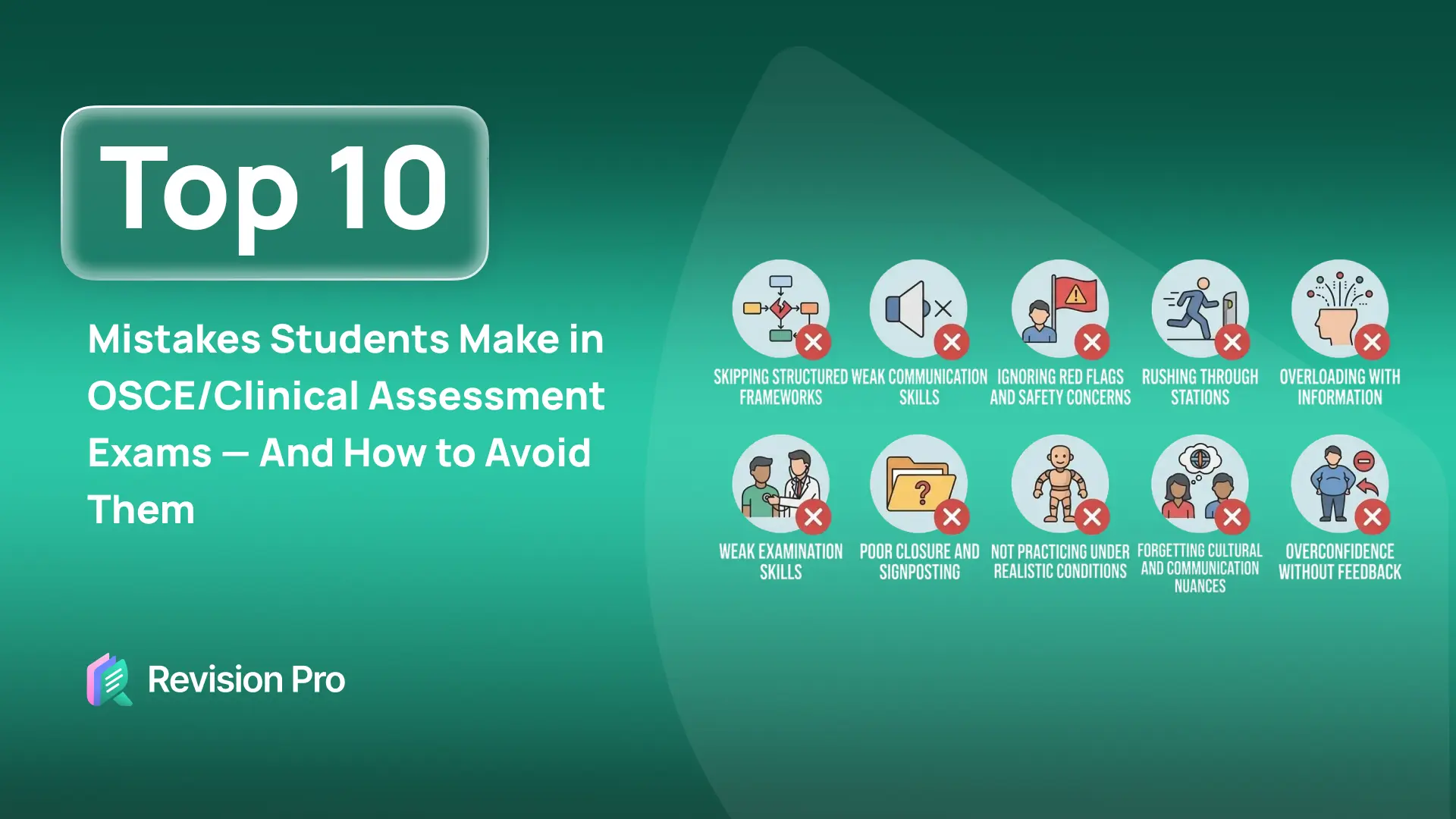
1. Skipping Structured Frameworks
One of the most common OSCE mistakes is the lack of a repeatable structure. Examiners expect candidates to follow frameworks like ICE (Ideas, Concerns, Expectations), structured history-taking, and signposting during consultations. Candidates who jump between topics or forget essential steps often lose marks for clarity and organisation.
Tip: Memorize a simple, consistent framework for all stations. Practicing this structure in mock stations builds automaticity.
2. Weak Communication Skills
Strong clinical knowledge is useless if you cannot communicate effectively. Speaking too quickly, using medical jargon, or failing to listen attentively can reduce examiner scores.
Tip: Practice patient-friendly language, active listening, empathy statements, and clear summaries. Scenario-based communication practice is highly effective.
3. Ignoring Red Flags and Safety Concerns
OSCEs heavily test patient safety. Missing warning signs, not asking about urgent symptoms, or failing to escalate risks are frequent errors.
Tip: Always include safety-netting and red-flag screening in your stations. Make it part of your routine.
4. Rushing Through Stations
Time pressure leads candidates to skip essential steps, compromising rapport, accuracy, and safety.
Tip: Use timed mock stations to develop pacing. Practicing under exam conditions helps you balance speed with thoroughness.
5. Overloading With Information
Many students try to impress examiners by providing excessive explanations or irrelevant details. This can confuse patients and reduce clarity.
Tip: Focus on concise, patient-centered communication. Highlight key points and avoid unnecessary tangents.
6. Weak Examination Skills
Incorrect technique, incomplete examinations, or poor hand hygiene may cost marks. Even small lapses indicate a lack of preparation.
Tip: Follow structured checklists, practice with peers, and review each station until your technique is consistent.
7. Poor Closure and Signposting
Failing to summarise findings, explain next steps, or clarify patient understanding is another common error. Examiners value clear closure.
Tip: End each station with a summary, advice, and safety-netting, ensuring the patient feels informed and reassured.
8. Not Practicing Under Realistic Conditions
Studying theory or watching videos is insufficient. Real improvement comes from scenario-based practice with timed stations and realistic patient interactions.
Tip: Use structured platforms or mock exam sessions. RevisionProsCE, for instance, provides examiner-style scenarios and practice stations that mirror UK OSCE conditions.
9. Forgetting Cultural and Communication Nuances
International Medical Graduates often struggle with cultural differences in communication and patient expectations. Misunderstanding these nuances can cost marks.
Tip: Learn common UK patient phrases, practice empathy, and adapt your communication style for different patient backgrounds.
10. Overconfidence Without Feedback
Believing you are ready without receiving objective feedback can leave hidden weaknesses unaddressed. Self-assessment alone is rarely sufficient.
Tip: Record practice sessions, work with peers, or use platforms that provide detailed feedback to track performance and correct errors.
Turning Mistakes into Mastery: OSCE Success for IMG
Avoiding these ten common mistakes requires more than memorization. It demands structured preparation, scenario-based practice, feedback, and consistent rehearsal. OSCE success hinges on competence, confidence, and clarity, not just theoretical knowledge. Platforms like Revision Pro offer realistic, examiner-designed stations and structured guidance, helping candidates identify gaps and refine their performance before the real exam.
By focusing on structured frameworks, communication, patient safety, and realistic practice, students can dramatically improve their OSCE results and reduce exam-day anxiety.