


Geriatric Medicine SCE.
Make it stick.
2,500+ exam-style questions, 440+ revision notes, 4,900+ flashcards and 24 podcast episodes, mapped to the Geriatric Medicine SCE blueprint. One course for the SCE and the European EGeMSE, which is held on the same day.
UNTIL THE EXAM · 21 JULY 2027
RESOURCES
Your Geriatric Medicine SCE resource

Comprehensive Learning Programme
Give every difficult question a next step: understand it, make it stick, and test yourself again. Your Geriatric Medicine revision tools, together in one programme.
What you get:
- 2,500+ original MCQs across all 26 topics, covering every area of the Federation blueprint
- 64 MCQs with images: clinical photographs, ECGs, radiographs, CT and MRI scans and DXA reports
- 440+ structured revision notes across the curriculum
- 4,900+ flashcards in 445 decks for active recall and spaced repetition
- 24 podcast episodes with conversational teaching on the decisions that matter on the ward
- Mock Mode and topic practice with progress analytics
- Personal notes, your own cards and buddy study
Introductory price · until 28 April 2027
£49
A complete learning system for your SCE

Put your commute to work
Hear the reasoning behind everyday decisions on the older people’s ward. Each conversational episode takes one topic, from stroke and delirium to falls and palliative care, and works through the choices and traps that matter in the exam.

Study with a buddy
Work through the same questions with a study partner. Submit independently, compare your answers and use the explanation to discuss the reasoning. Both learners need course access.

Turn your notes into recall
Use the prepared flashcards, then create personal cards from your own notes. Edit the question and answer to capture the learning point you want to revisit.

Know what to practise next
Track accuracy by topic and return to weaker areas. Let your question history guide focused practice across stroke, falls, delirium and dementia, rehabilitation and the wider curriculum.
Explore your Geriatric Medicine learning tools
Explore the tools you’ll use to practise, understand and remember. Take a closer look at the Geriatric Medicine SCE course through one subject, stroke thrombolysis in older people, with a real image question, note, flashcard deck and podcast episode.
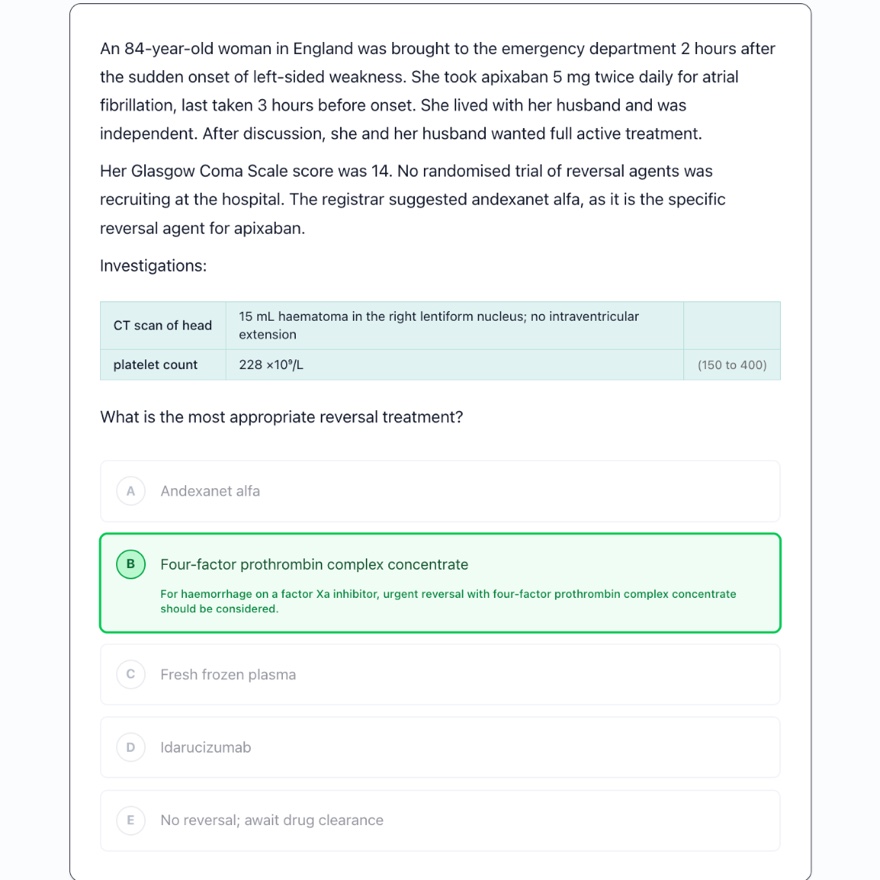
2,500+ MCQs · 64 MCQs with images
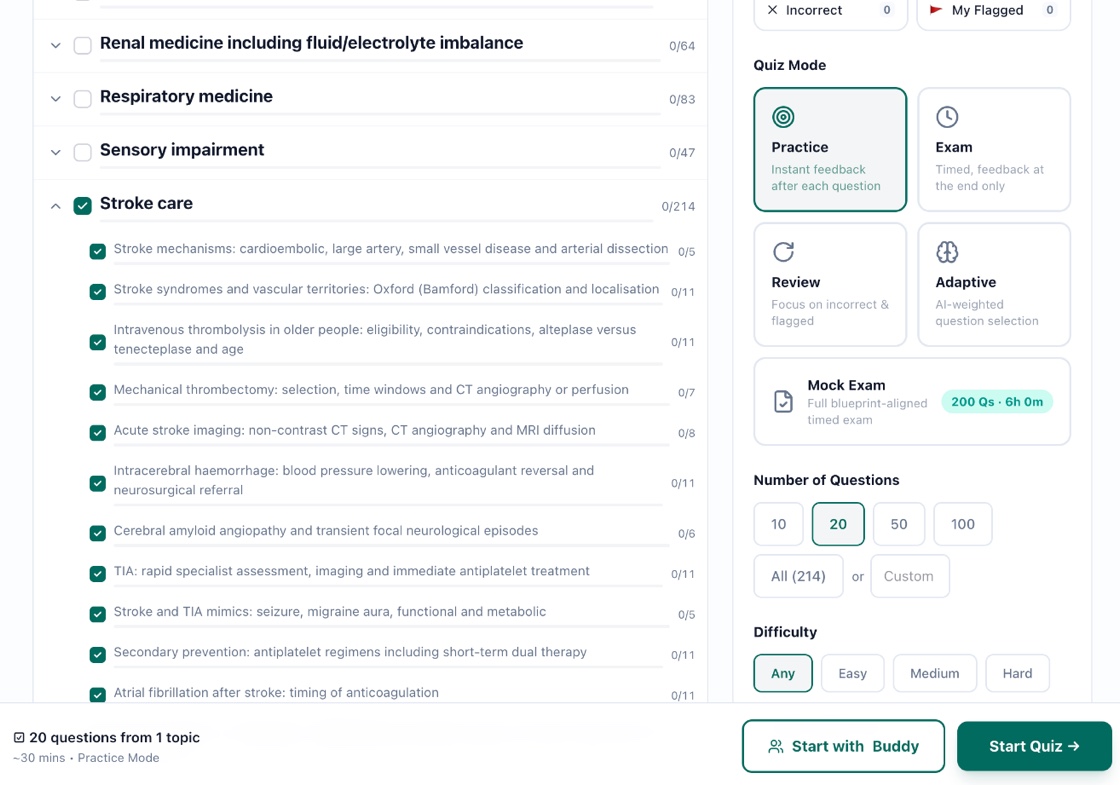
Practise the decision. Understand the answer.
Work through original best-of-five questions, then use the explanation to unpack the clue that changes the diagnosis, investigation or next step. In a bleed on apixaban, that can be knowing why the specific antidote is not the answer.
- Clear explanations alongside your answer
- Topic practice and focused review
- Your own notes beside the learning point
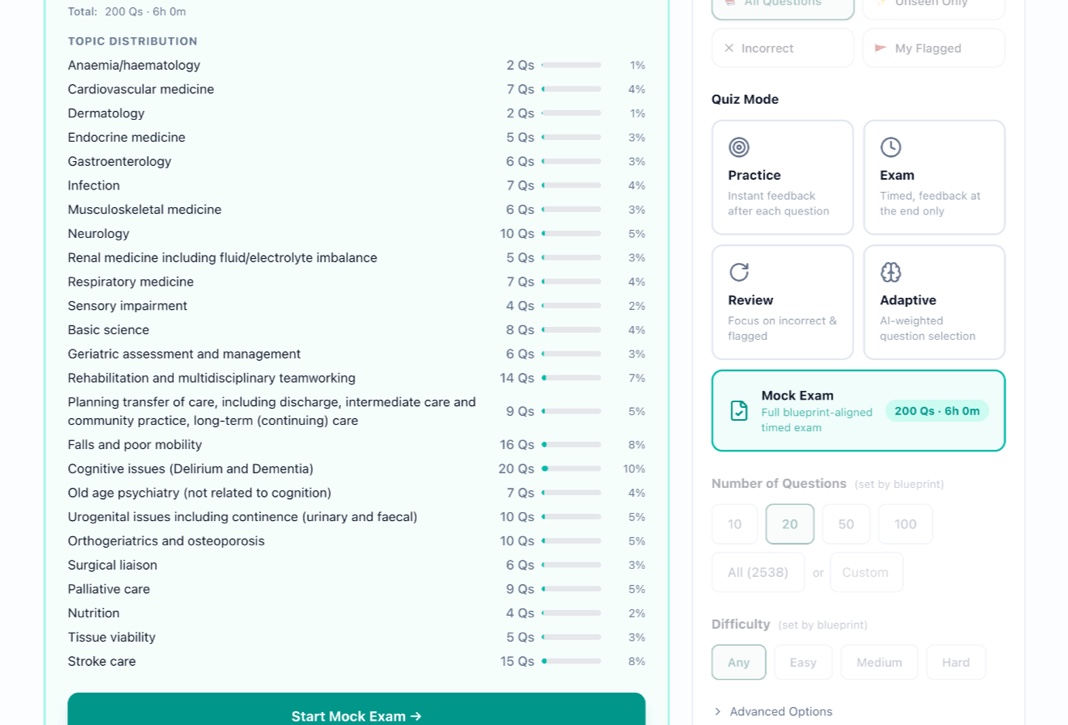
Mock Mode
Build your exam rhythm.
Put your knowledge under timed conditions. Practise committing to one best answer, sustaining concentration and managing your pace before reviewing the questions that cost you marks.
- 2 timed papers of 100 questions
- Weighted to the official blueprint
- Review your gaps after the session
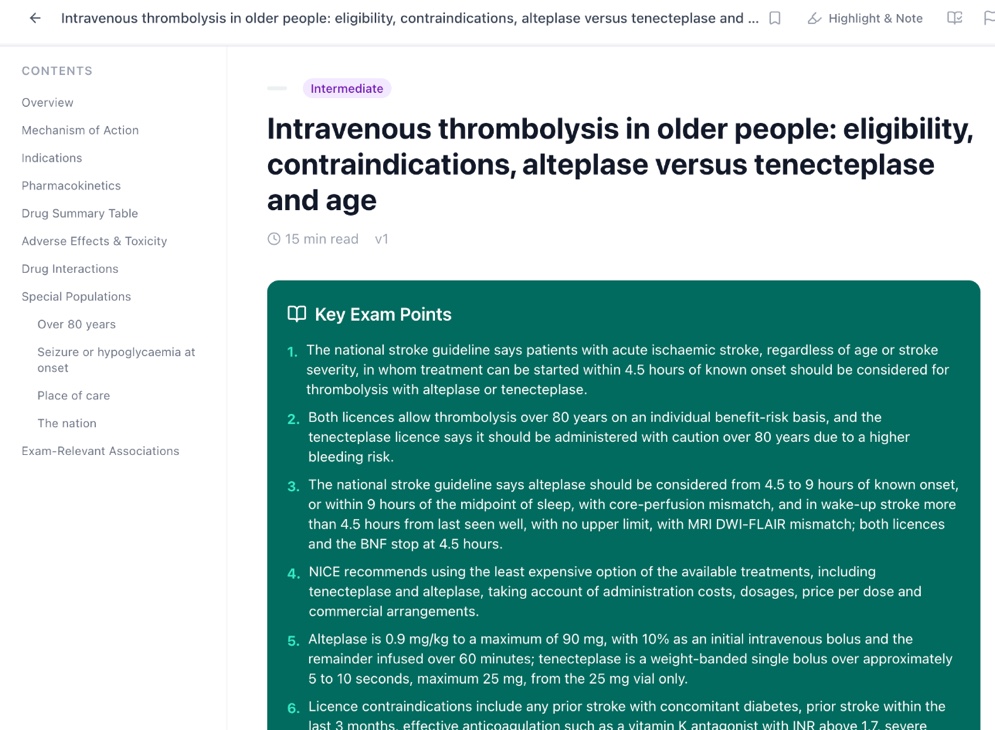
440+ structured revision notes
Turn a difficult topic into a clear picture.
Go beyond the answer explanation. Follow a presentation from recognition to management, from the eligibility checks before thrombolysis to the choice between alteplase and tenecteplase, and revisit the distinction you need to remember.
- Topic contents for quick navigation
- Focused sections and key exam points
- Highlight and add personal notes
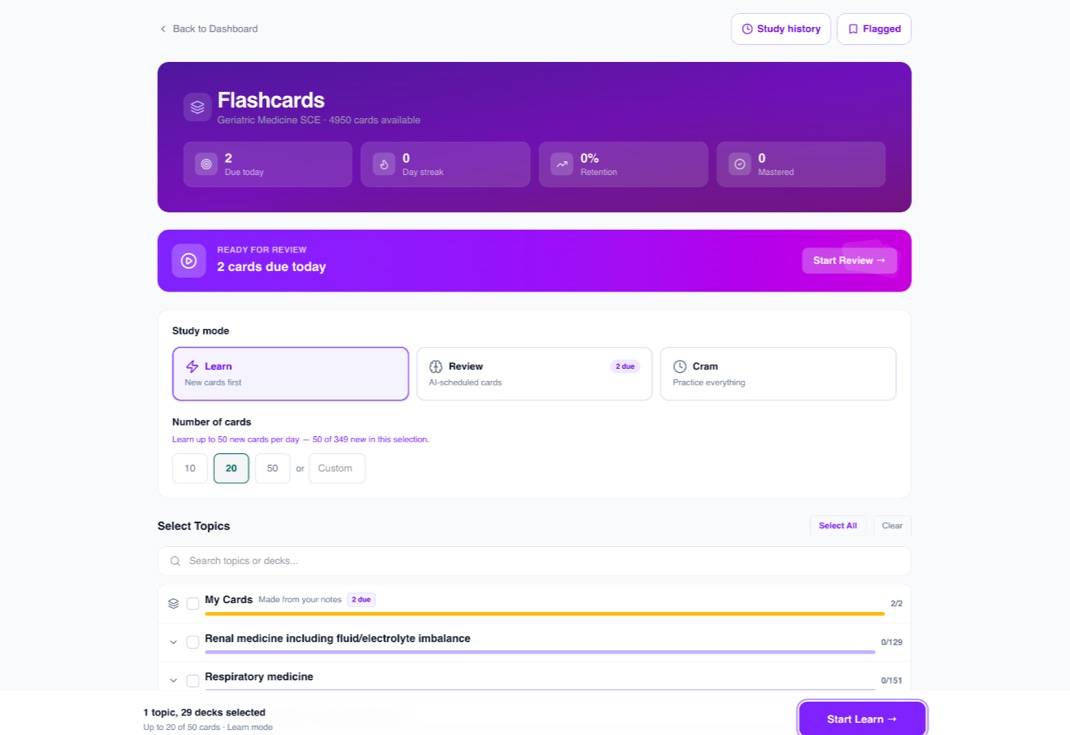
4,900+ flashcards in 445 decks
Make the learning point stick.
Build recall with the course flashcards, then make your revision personal. Turn your own notes into editable cards and keep the points you find difficult close at hand.
- Spaced-repetition review
- Learn, Review and Cram modes
- Personal flashcards in My Cards
Think independently. Compare together.
Make revision a conversation.
Work through shared questions with a study partner. Answer independently, compare your choices, then use the explanation to discuss why one answer fits best.
- Shared questions, independent answers
- Compare choices after both learners respond
- Both learners need access to the same course
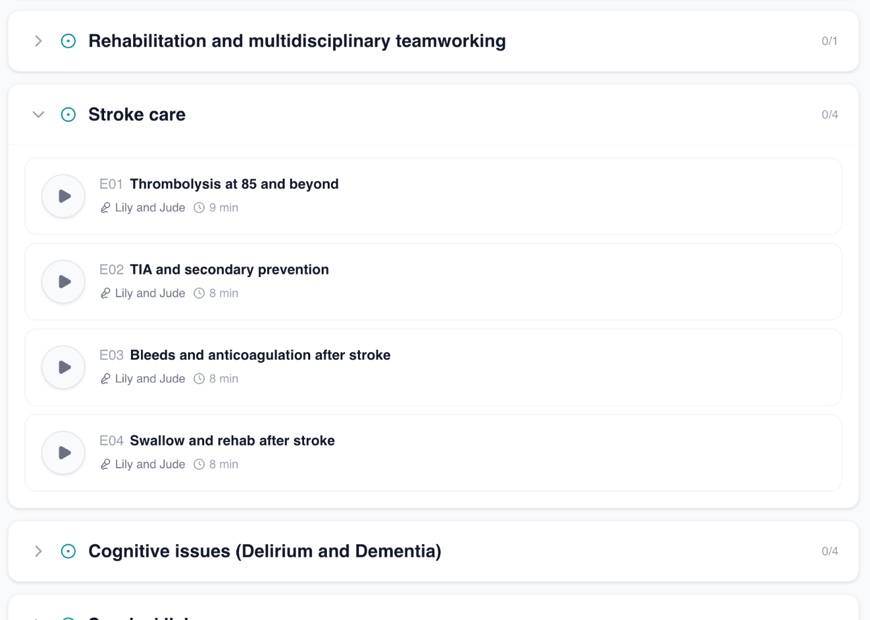
24 podcast episodes
Keep learning when you step away from the screen.
Follow a conversational episode on your commute. Each one takes a single topic, such as thrombolysis in the very old or the confused patient on the ward, and works through the decisions, the numbers and the traps that matter in the exam.
- About 3.5 hours of audio across 24 episodes
- One topic per episode, from stroke to palliative care
- Built around the same topics as the questions and notes
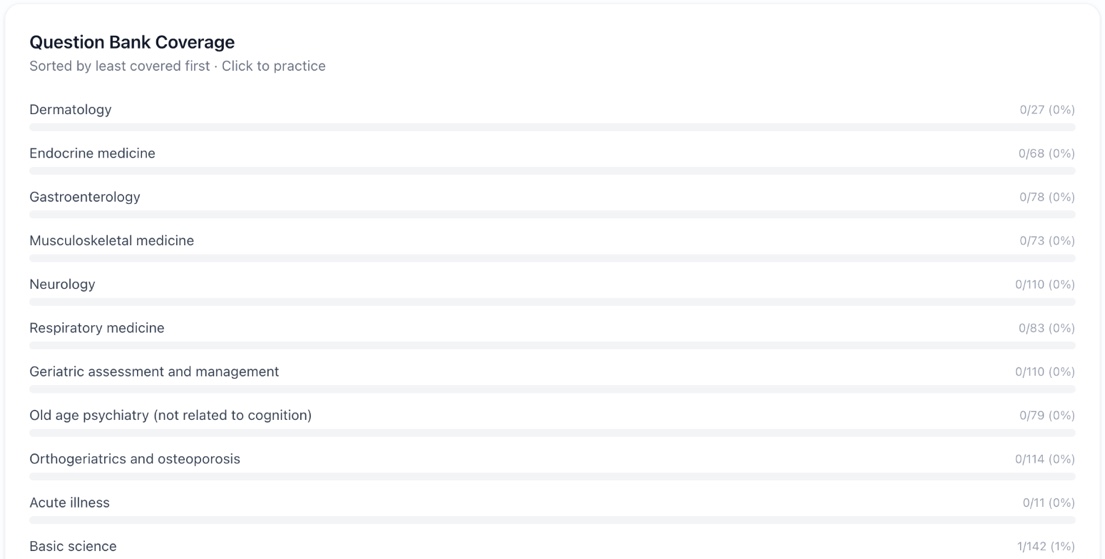
Know what to practise next
Give your next session a clear purpose.
See how your accuracy and topic coverage are developing. Find the areas that need attention and move back into focused practice with a clearer plan.
- Coverage across all 26 Geriatric Medicine topics
- Click a topic to return to practice
- Practice history to guide your next step
Geriatric Medicine SCE: frequently asked questions
Your revision tools, exam preparation and introductory access, explained.
What is the Geriatric Medicine SCE exam format?
When do applications open?
What is included in this Geriatric Medicine SCE resource?
Is the resource mapped to the Geriatric Medicine SCE blueprint?
Is this suitable for the EGeMSE and for international candidates?
How does Revision Pro compare with other Geriatric Medicine SCE resources?
How much is introductory access, and when does it end?
Can I revise on my phone and with a study partner?
Ready to bring your revision together?
Make the next session count. Practise a decision, understand the reasoning, and come back ready to recall it.
For the July 2027 exam, with access until 22 July 2027.
Enrol now for £49